

Barrier Repair: Why Skin Sometimes Looks Worse Before It Gets Better
It’s easy to believe skin should improve quickly. Social media and marketing often promise visible results in days.
But when the skin barrier is compromised, real repair takes time.
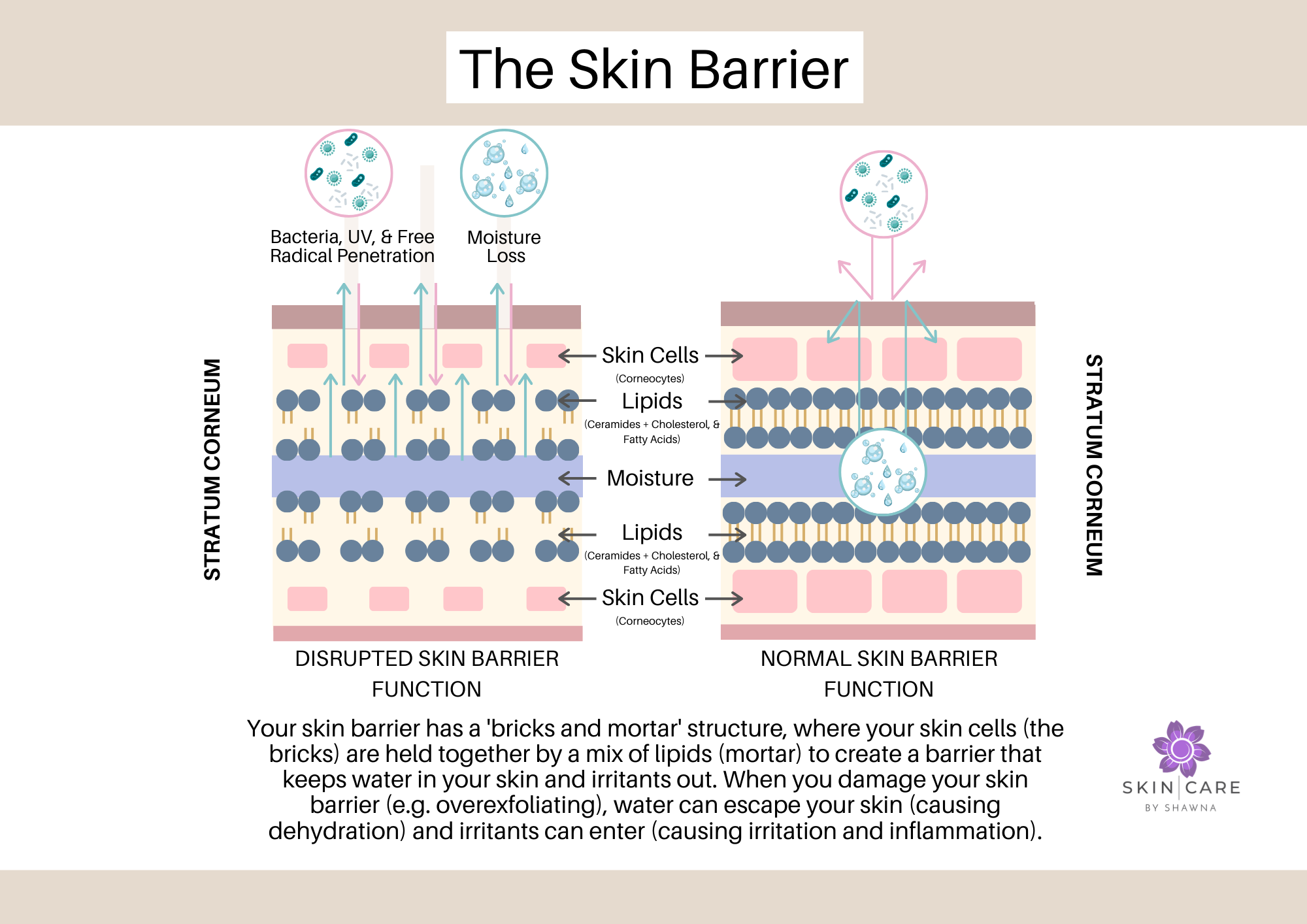
Healthy skin functions like a well-built wall. Skin cells act like the bricks, and natural oils (lipids) act like the mortar holding everything together. This structure helps the skin retain hydration, protect against environmental stress, and maintain balance.
When the skin barrier becomes compromised, the structure of the skin weakens, and its ability to protect itself is reduced.
This can happen for several reasons, including:
• Over-exfoliation or aggressive treatments
• Harsh skincare products
• Environmental exposure such as sun, wind, or pollution
• Chronic inflammation
• Periods of increased stress
• Imbalances within the gut microbiome
When the barrier is disrupted, the skin struggles to regulate hydration and defend itself properly.
Common signs of barrier damage may include:
• Redness or irritation
• Dehydrated but oily skin
• Increased sensitivity
• Breakouts or congestion
• Pores appearing more visible
• Skin reacting to products it previously tolerated
At this stage, the skin is essentially in a protective mode, trying to restore balance.
Internal factors can also influence how well the skin barrier functions. The gut and skin are connected through the gut–skin axis. When the gut microbiome is out of balance, it can contribute to systemic inflammation, which may affect how the skin responds and repairs itself.
Supporting the skin barrier means addressing both external factors, such as skincare and environmental exposure, and internal factors, including stress and overall health.
Repairing the barrier is not about forcing quick results.
It’s about supporting the skin so it can rebuild its natural protective structure over time.
The Barrier Repair Timeline
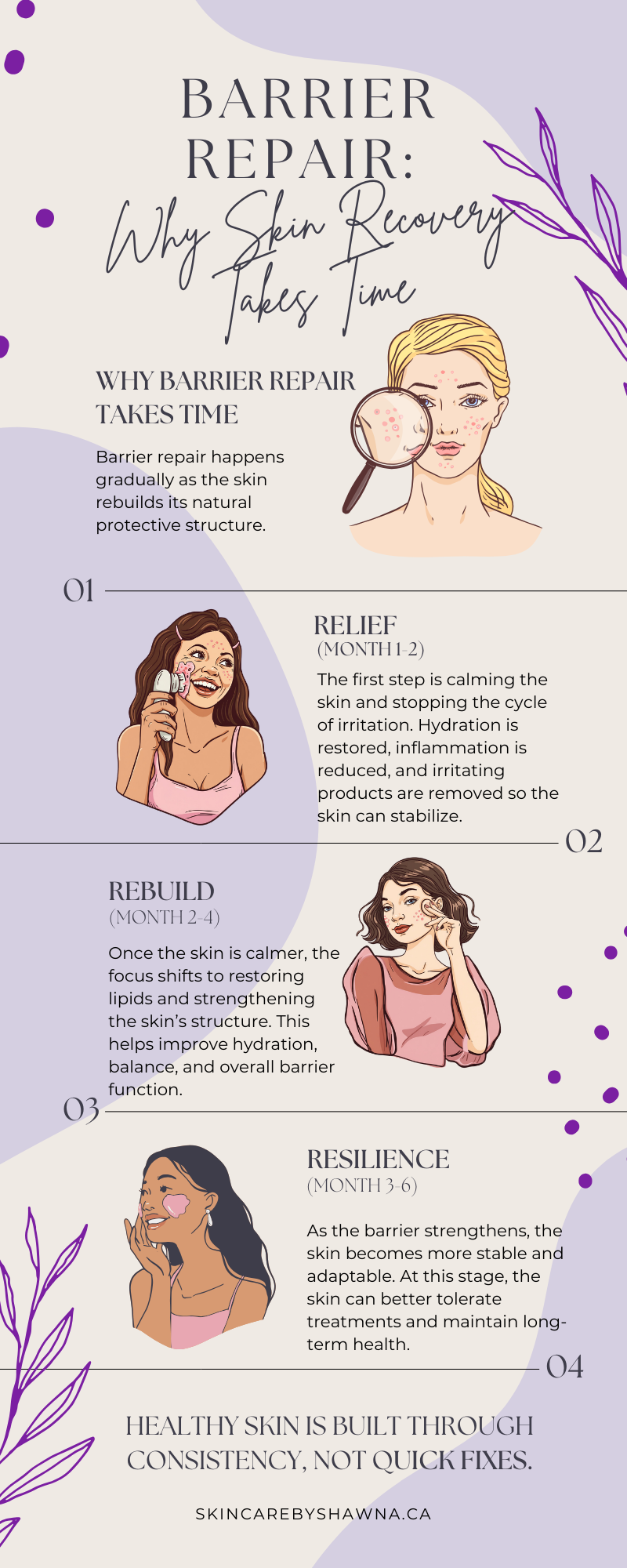
Once the skin barrier has been compromised, the goal is not to push the skin harder. The goal is to support the skin so it can rebuild its protective structure over time.
Barrier repair typically happens in stages. Understanding these stages helps set realistic expectations and allows the skin to recover in a healthier, more sustainable way.
Phase 1 – Relief
The first step in barrier repair is to calm the skin and stop the cycle of irritation.
At this stage, the focus is on reducing inflammation, restoring hydration, and removing products that may be irritating or overwhelming the skin.
Many people notice that their skin feels more comfortable during this phase. Redness may begin to settle, sensitivity may decrease, and the skin often feels less tight or reactive.
The goal of this phase is stability and comfort, not dramatic change.
Phase 2 – Rebuild
Once the skin has stabilized, the focus shifts to rebuilding the barrier structure.
This stage supports the lipids and proteins that help hold skin cells together and maintain hydration within the skin.
As the barrier strengthens, the skin often begins to hold moisture more effectively and feel more balanced overall.
Much of this rebuilding process happens beneath the surface, even before visible changes become obvious.
Phase 3 – Resilience
As the barrier continues to strengthen, the skin becomes more stable and adaptable.
At this stage, the skin is better able to maintain hydration, tolerate treatments, and protect itself from environmental stress.
When the barrier is functioning well, the skin becomes more resilient, and other concerns, such as congestion, uneven tone, or early signs of aging, can often be addressed more effectively.
Why Skin Sometimes Looks Worse Before It Gets Better
During the early stages of barrier repair, some people may notice temporary changes in their skin.
This can include mild dryness, flaking, or temporary congestion as the skin begins regulating hydration, oil production, and cellular turnover more effectively.
This phase is sometimes referred to as the repair dip.
It doesn’t happen for everyone, but when it does, the skin can appear slightly worse before it improves. This is often part of the skin adjusting and rebuilding its protective structure.
With consistent care and barrier-supportive skincare, the skin typically moves through this phase and continues toward greater stability and resilience.
Skin Barrier Repair FAQ
How long does it take to repair the skin barrier?
Barrier repair happens gradually and can vary from person to person. Many people begin noticing improvements in comfort, hydration, and reduced sensitivity within the first month as the skin begins to stabilize.
However, rebuilding the skin’s protective structure takes longer. Depending on how compromised the barrier was, deeper repair and improved resilience can take several months.
Consistent skincare, gentle treatments, and avoiding irritating products give the skin the best chance to rebuild its protective structure over time.
What helps the skin barrier recover?
Supporting the skin barrier is usually more effective than trying to aggressively treat individual concerns.
This often includes:
- Gentle, barrier-supportive skincare
• Avoiding excessive exfoliation
• Maintaining hydration within the skin
• Supporting overall health, including stress management and gut health
As the barrier strengthens, the skin becomes more stable, more comfortable, and better able to maintain balance.
How do I know if my skin barrier is damaged?
Common signs of a compromised skin barrier include redness, increased sensitivity, dehydration, breakouts, and skin that suddenly reacts to products it previously tolerated.
Advanced skin analysis can help identify signs of barrier disruption and guide a treatment plan that supports the skin’s natural repair process.
If you’re unsure where your skin currently sits along the barrier repair timeline, advanced skin analysis can help provide a clearer picture of what your skin needs.
At Skin Care by Shawna, treatments are designed to support the skin’s natural repair process and help guide it toward long-term balance and resilience.
You can learn more about what to expect during your visit in my article:
Your Skin Care Journey at Skin Care by Shawna in Dawson Creek.

Leave a Reply